What’s a teaser bet? A teaser is a parlay, meaning that two or more bets are combined into one ticket.
Teasers are a unique way to change the spread of multiple games and are most common in high-scoring sports like the NFL.
We’ll run through teaser examples in both sports, starting with the NFL.
Teaser betting basics
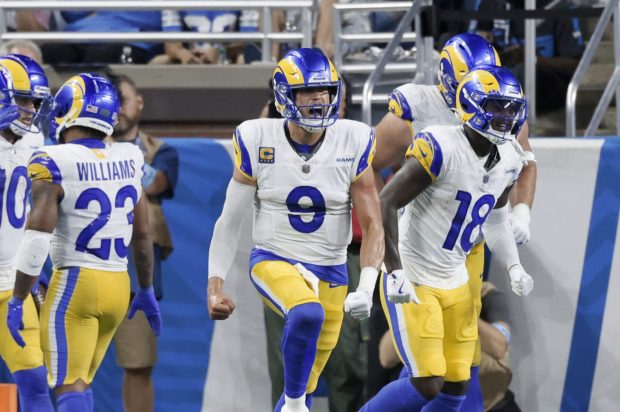
Let’s use the Kansas City Chiefs and Los Angeles Rams as our first example.
For our sake, we’re going to say the Chiefs are 9.5-point home favourites over the Las Vegas Raiders, while the Rams are 4.5-point home underdogs versus the San Francisco 49ers.
If you like Kansas City and Los Angeles but aren’t 100% confident they will cover the spread, you can tease the spreads to more palatable numbers.
In this scenario, we will tease both games by 7 points, standard to the NFL, as it represents a touchdown and extra point.
By doing that, we bring the Chiefs spread down to -2.5, meaning they only have to win by a field goal instead of 10. Los Angeles, meanwhile, would become a +11.5 underdog, meaning they can lose by 11 points or fewer, instead of just four.
When teasing a game, you are paying more juice (the cut you give the sportsbook for taking your bet), but are gaining points. That’s the key trade-off.
Teaser bet odds
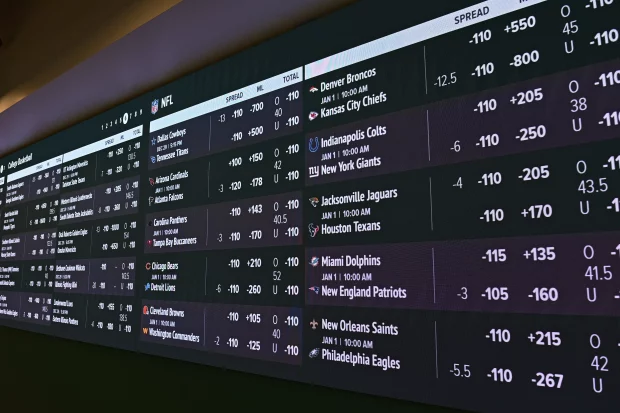
Normal point spread odds in the NFL (and the NBA) are -110 for both the favourite and underdog. So at the normal spread in the Chiefs and Rams examples, it means Chiefs -9.5 and Rams +4.5 would both have odds of -110.
Those odds mean that you would have to wager $110 to win $100.
If you bet on these games as a parlay, though, the odds would be +264. That would return a profit of $264 on a $100 wager. Why the bigger payout? Because betting on more than one outcome on a single ticket comes with more risk. You would have to get both bets right in order to win.
Now, when teasing these games, the odds would change.
Let’s say the Chiefs at -2.5 had odds of -260 while the Rams at +11.5 was -240. Bet together, the odds would be -104 and you would profit $96.15 on a $100 wager.
It’s worth noting that the odds won’t always be exactly the same for every teaser card.
Teasing totals
Teasing totals is very similar to teasing points.
If an over/under is set at 47.5 at -110 odds in the NFL, you can tease it seven points either way. Over 40.5, or under 54.5 both provide more of a cushion, but it changes the odds.
How to bet a reverse teaser
So we’ve established teasers are selling odds to buy points in order to be safer, but what if you want to do the opposite?
This isn’t typically given as an option, but you can manually change the spreads in what is known as a reverse teaser. That means you are teasing the line in the opposite direction to get a massive uptick in payout potential.
This is more unlikely to cash and you’re essentially selling points to get plus odds.
Let’s say the Buffalo Bills are 10.5-point favourites at home vs. the Carolina Panthers and you believe a total blowout is going to happen. Then you can reverse-tease them to -17.5, meaning they now have to win by 18 or more.
Further, if the Green Bay Packers are 4.5-point underdogs against the Dallas Cowboys and you think they’ll win, you can reverse tease the line to Packers -3.5.
Combining these two reverse teasers is risky, as you are going a touchdown away from what the operator believes will occur. But the odds would be tantalizing and look like this:
What’s a moneyline bet? If you’re new to betting and have ever wondered what that term means, we have you covered in this moneyline bet explainer.
A moneyline bet involves picking the outright winner of a game. You are simply picking which team you think will win straight up. If the side you choose wins, you win the bet.
Betting on the moneyline is one of the most common ways to wager on sports and is also the most straightforward. We’ll take a look below at different moneyline (ML for short) examples for Big Four sports games.
Moneyline bet explainer
Each team is assigned its own odds before a contest begins. One team is deemed the favourite while the other is the underdog. The favourite will have a minus sign (-) before its odds and the underdog will be denoted with a plus sign (+).
These odds are linked to the implied probability of each team winning. So you will sometimes see odds that are similar and others where there’s a large discrepancy. Reasons for a massive difference in odds include talent level, team success, and the health of a roster.
If all teams were given the same odds, it would make little sense to pick a last-place team over a conference leader.
What the odds also tell you is the amount you would win depending on how much you wagered. Let’s take a look at some examples.
Odds
Wager
Win
Implied Probability
-250
$250
$100
71.43%
-110
$110
$100
52.38%
+175
$100
$175
36.36%
+300
$100
$300
25.00%
Moneyline bet examples
Now that you understand how odds are linked to payouts and a team’s implied probability of winning a certain matchup, let’s examine some hypothetical moneyline bets for Ontario’s most popular teams.
Matchup
Away odds
Home odds
Tigers at Blue Jays
+120
-135
Panthers at Bills
+490
-675
Ducks at Leafs
+260
-310
Celtics at Raptors
-560
+425
Moneyline odds are presented the same way across the Big Four sports. The only difference in these examples is the odds discrepancy which, again, reflects the quality of opponents facing off.
The odds will be similar in a matchup between two evenly matched teams (like the Tigers/Blue Jays example) while the odds will be nowhere near the same when one team is significantly better than the other (like the Panthers/Bills matchup). The same goes for that Leafs and Ducks game.
Unless Toronto was missing a number of significant pieces from its roster (say Auston Matthews and Mitch Marner), you can expect it to be a large favourite every time it faces a team on Anaheim’s level.
To recap what we illustrated above: In order to win $100 on the Bills moneyline, you would need to wager $675. You would win $490 on a $100 wager if you elected to pick the Panthers on the ML and they won.
Moneyline betting tips
Because you would have to risk a lot for a small reward in that Bills scenario, blindly picking the favourite and backing Buffalo on the ML wouldn’t be the recommended play here unless it was part of a parlay.
You could, however, pick the Bills to win by a certain amount of points and back them on the point spread. You would get a better return on your investment if they were able to do so.
Underdogs win games every night, so picking the team that isn’t favoured to win has the potential to generate a large return on investment. But remember: they are underdogs for a reason.
The Bills might not be the best moneyline pick if they’re hefty favourites Photo by Steve Luciano/AP.
Just like we wouldn’t recommend betting on the favourite every time, we also wouldn’t recommend picking underdogs simply because you have the potential to earn more money.
Research, following trends, and how specific teams match up against each other are important when determining who to bet on. Sometimes, it may all point to backing the underdog.
Paying attention to the health of a roster is especially important when making bets because a key player being out can drastically swing the lines.
Every year, hundreds of Division I programs and thousands of players compete in a season-long quest for glory.
The season culminates in a crescendo of chaos known as March Madness. It’s a three-week tournament where the country’s top 68 teams battle for national title rights.
-> New to NCAA Basketball wagering? Sign up at NorthStar Betsto get the latest odds, insights and betting tools throughout the season
-> New to NCAA Basketball wagering? Sign up at NorthStar Betsto get the latest odds, insights and betting tools throughout the season
The typical collegiate season is populated with mini-tournaments, conference games and non-conference marquee matchups. Luckily for sports bettors, there are opportunities to wager on all of these events.
How to bet on college basketball
If you’re wondering how to bet on college basketball, you’ve come to the right place.
While it may seem like there’s an overwhelming amount of options to choose from, this article will break down the best ways to find value within the college basketball landscape.
-> Before you get started, create your NorthStar Bets account to explore live odds and daily NCAA Basketball markets
-> Before you get started, create your NorthStar Bets accountto explore live odds and daily NCAA Basketball markets
Moneyline
A moneyline bet is simple: pick the team that you think will win the game. You’ll win your bet if you make the correct prediction.
Moneyline (or “ML,” for short) betting is more popular in lower-scoring sports such as hockey or baseball, but there are still plenty of opportunities to place this type of wager in college basketball.
Each team is assigned a set of odds. The underdog is labelled with a plus (+) sign and the favourite will have a minus (-) sign before its odds. The team that’s favoured is the side projected to have a greater chance of winning.
A -200 favourite has a 66.7% implied probability of winning, while a -400 favourite sits at 80.0%.
With hundreds of games to choose from, there will surely be options to find more level picks on the moneyline. A matchup may feature a -130 favourite and a +110 underdog.
-> Want to see current NCAA Basketball moneyline prices? Check the latest at NorthStar Bets
-> Want to see current NCAA Basketball moneyline prices? Check the latest at NorthStar Bets
You will, however, find severely lopsided ML matchups in college basketball due to the large gap in talent between top-end teams and lower-end programs.
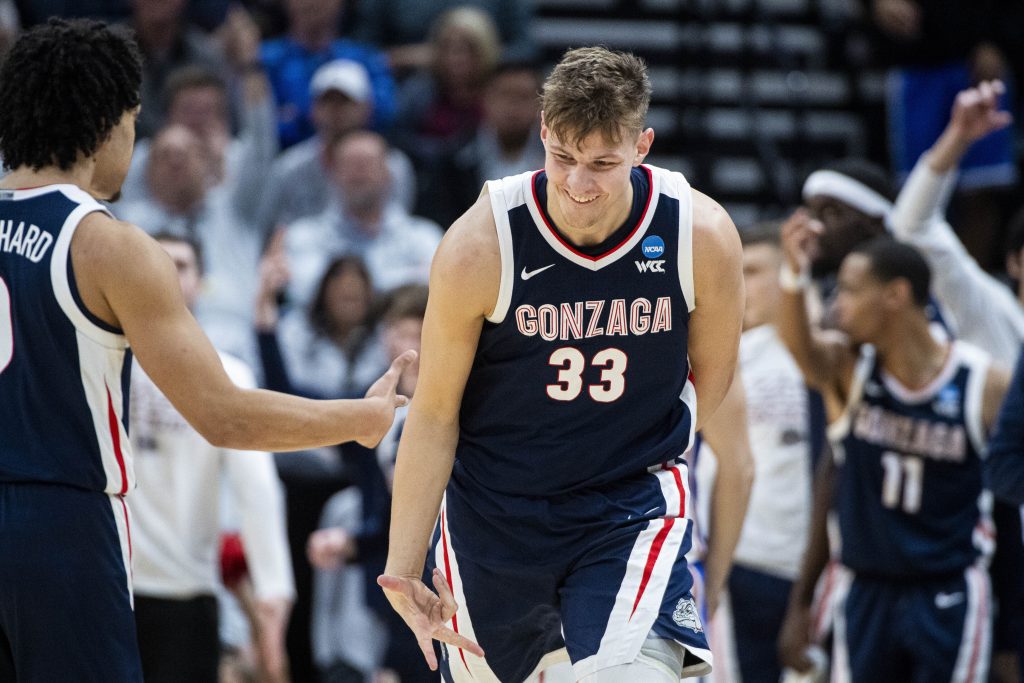
For example: If Gonzaga, a national powerhouse, were to play Pepperdine, a smaller school, Gonzaga could be upwards of -1,500 on the moneyline. That would mean the Bulldogs had a 93.75% implied probability of winning.
Gonzaga is a mainstay in the NCAA tournament. Photo by Isaac Hale/AP.
Pepperdine would be around +900 to win in that hypothetical scenario. Neither would necessarily be attractive betting options. In short, Pepperdine is almost certainly going to lose, and you’d have to wager $1,500 on Gonzaga to win $100.
For matchups like that, point spread betting is often the smarter play.
Here are some examples of moneyline wagers and what you could win based on the odds and how much you wagered:
Odds
Wager
Win
-110
$100
$100
-1,000
$1,000
$100
+900
$100
$900
Point spread
Point spread betting is the most popular way to bet on college basketball. It provides an opportunity to get in on an uneven matchup at relatively even odds.
Sportsbooks assign a point spread to the favourite, signalling this by placing a minus (-) sign next to the number of points they need to win by. The underdog will have a plus (+) sign next to the same number.
Using the above example, it’s clear that Pepperdine would be underdogs, and Gonzaga could be something like 26.5-point favourites.
The line would look like this:
Gonzaga -26.5 (-110) vs. Pepperdine +26.5 (-110).
If you bet on Gonzaga, the Bulldogs would need to win by 27 points or more. On the other hand, a Pepperdine bettor would cash their ticket if the Waves won outright or lost by 26 points or fewer.
For the most part, books set the point spread odds at -110 on each side. That means a $110 bet wins $100. The $10 difference, known as the juice, is the cut the sportsbook takes from each bet.
There are several factors you should consider when wagering on the point spread, including game location, injuries and recent results.
There’s also an option to raise or lower the spread. These are called alternative spreads and they can help a bettor find more value.
For example, let’s say LSU is playing at Alabama, and the Crimson Tide are listed as 6.5-point favourites. If you believe Alabama is going to blow out LSU, you could increase the line and take the team at -9.5 on an alt spread.
As a result, this would change your odds from -110 to around +140. You could also move the line to -3.5, which would produce odds of around -180 because your chances of winning would be deemed more likely to happen.
-> Ready to try spread betting?Join NorthStar Bets and explore live, moving lines daily
-> Ready to try spread betting? Join NorthStar Bets and explore live, moving lines daily
Totals
If you want to bet on a game but aren’t comfortable picking a team to cover, you can bet on the total. Also known as the over/under or O/U, you are betting on the total amount of points scored in a contest.
Totals in college basketball can vary based on competition, ranging from 120 points to 150-plus.
Using the LSU vs. Alabama example, we can assume that two high-scoring teams would have their O/U set near 142.5. To successfully bet the over in this game, a combined 143 points or more need to be scored for the ticket to cash.
For anyone who took the under instead, 142 points or fewer means you win the bet.
Some important context in over/under betting includes how often the teams foul, prior matchup history, and each team’s offensive and defensive pace.
Similar to the point spread, bettors have the option to choose alternate totals when betting on college basketball.
Sticking with Alabama and LSU, one could choose an alternate line of 137.5 points. If you believed the match was going to be a defensive battle, this could be a good option, as the under could now pay something in the range of +175, while the value of betting the over might shift to -250.
One of the main differences between college hoops and the NBA is that the game is split into two 20-minute halves rather than four quarters of play. This makes first-half betting a popular market for college basketball enthusiasts.
First-half betting mostly follows the same rules of the moneyline, point spread and total markets.
Typically, the first-half moneyline would reflect the normal moneyline, with maybe a slight variance. A -190 moneyline favourite might have -220 odds to win the first half.
One wrinkle with first-half moneylines: If the score is tied after 20 minutes, the bet is considered a “push.” This means neither side wins and your stake is returned.
That’s not how it works for more point spread and totals wagers, though.
If the point spread for a Duke vs. Wake Forest game is set at Duke -10.5, the first-half spread may sit around -5.5. If Wake Forest is a notoriously strong starter, or if Duke is prone to sleepy first-half results, then taking the Demon Deacons at +5.5 could be a good play.
The same idea applies to totals. If a full game O/U between Michigan and Wisconsin is 126.5, the first half O/U may be set at 62.5.
How to bet college basketball parlays
A parlay is a unique way of combining multiple single bets into one larger wager to obtain a bigger payout, while also assuming more risk. Each additional bet is known as a leg and all legs need to win in order to cash the parlay. The entire ticket loses if one of the legs is incorrect.
Parlays begin with two legs but can have three, four, five, or more selections added to the ticket.
You can combine moneylines, totals and spreads on parlays and even mix and match sports.
An example of a college basketball parlay would be:
Alabama -6.5 (-110) Duke vs. UNC alternate over 140.5 (-130) Seton Hall ML (+230)
This would produce combined odds of +886, meaning you would net $886.67 on a $100 bet ($986.57 total return).
-> Build your own NCAA Basketball same-game parlay when you join NorthStar Bets
-> Build your own NCAA Basketball same-game parlay when you join NorthStar Bets
How to bet on college basketball futures
This betting market provides customers with the opportunity to place a bet on an event that will be settled in the future — sometimes months down the road.
Picking the national championship winner is the most popular futures bet in college basketball. Due to the one-and-done nature of the tournament, you can often find lengthy odds for even the best of teams.
The University of Connecticut won the national title in 2024 and opened the following season with +700 odds to repeat.
If you are confident the Huskies will make it to the Sweet Sixteen or the Elite Eight, there could be hedging opportunities available down the road.
There are other futures markets available to bettors such as conference winners and team win totals.
College basketball is divided into conferences, including the ACC, Big East, Big 12 and many others. Before March Madness begins, each conference has a tournament to crown its champion. These tournaments also follow a single-game knockout format where the winner gets an automatic bid to the tournament.
Some examples of what conference futures could look like prior to the season:
Creighton to win the Big East: +1,200 Baylor to win the Big 12: +250 Syracuse to win the ACC: +675 Gonzaga to win the WCC: -290
Many sports fans describe March Madness as the best sporting event of the year, and it’s hard to disagree.
The 68-team, single-elimination tournament has four play-in games as well as four regions with teams seeded Nos. 1 through 16.
The higher seed is usually favoured unless it’s a close matchup.
March Madness is known for its unpredictability, particularly in the first two rounds when there’s a disparity in seeding. This is an opportunity to find value on moneyline picks, where some upsets pay out at impressively long odds.
On top of ML picks, you can place wagers on totals, spreads and parlays.
We’ll leave you with a piece of advice when betting on March Madness: Maintain composure and wager responsibly.
It’s easy to fall into the trap of betting every game. That’s especially true when you pick a bracket and are invested in which team moves on. Stick to your analysis and find value in what you are confident in rather than betting all games just for the sake of it.
The tournament is called March Madness for a reason. Sometimes, everything you think you know about college hoops falls flat on its face.
-> Ready to put your NCAA Basketball knowledge to use ? Sign up for NorthStar Bets to access live odds, props, parlays and exclusive Canadian Insights all season long
-> Ready to put your NCAA Basketball knowledge to use ? Sign up for NorthStar Bets to access live odds, props, parlays and exclusive Canadian Insights all season long
The futures market is a completely different way of betting than the day-to-day plays that many indulge in.
Each game night, there are several betting markets available to wager on from the moneyline to the point spread, as well as player props and game totals. Those bets are settled the same night once the contest comes to a close. You either win or lose once the final game stats are recorded.
But a futures bet, unlike those other markets, isn’t settled the same night you make your wager. It’s more of a long-term play on season-long outcomes, like championship winners and individual awards such as MVP winners.
How to bet on futures
Many futures markets become live at the end of a league’s season and stay open throughout the duration of it. That gives bettors plenty of chances to enter the market.
For example: The Toronto Maple Leafs entered the 2022-23 NHL season as a +1,000 favourite to win the Stanley Cup as of early October. If they play well, their odds could shorten but a big losing skid could lengthen their odds to +1,500 or longer.
A popular example of a futures bet would be placing a wager on the Super Bowl champion. Upon the conclusion of a season, new odds will be set for the following year and allow you to bet on who you think will win the next Super Bowl.
This market will then remain open throughout the NFL draft, free agency and right into the next season. But a certain team’s odds could change drastically depending on how its offseason shakes out or how successful it is throughout the following campaign.
Odds are constantly moving, sometimes from week to week, based on factors like performance and injuries.
How to bet on futures examples
The Los Angeles Rams, the reigning Super Bowl champs, jumped the futures odds board last offseason after trading for Matthew Stafford.
That means you would have profited more if you placed a bet on the Rams to win before they got him. Sportsbooks and gamblers, who influence lines based on who they wager on, deemed the Rams as a better bet to win with Stafford in the fold. Turns out they were right.
While you’re likely to get any player or team at plus-money odds before a season, the best will shorten their odds as the playoffs inch closer.
Some will become heavy favourites and this is when you will see a minus (-) sign before their odds. This was the case when players like Connor McDavid and Shohei Ohtani pulled ahead down the stretch of their 2021 MVP seasons.
Ohtani was +3,000 to win MVP at some sportsbooks during last spring training. That means a $100 wager would have returned $3,000 in profit. The two-way star became such a heavy favourite by August and into September that a futures bet on him to win at that point had essentially no value.
At -2,500 to win, which he was at times during that stretch, it would have taken a $100 wager just to win $4.
A futures MVP bet on Ohtani ahead of last season proved to be a great investment. Photo by Elaine Thompson/AP.
Searching for value and knowing when to strike in the futures market is key. It’s also a more difficult market to have success in. That’s because you are placing bets when all or most teams/players have a chance at winning. Or, as in the Ohtani example, at a time when the favourites have little value.
While we focused on the NFL, the Big Four sports all have similar futures options.
Futures markets
You can place a bet on who you think will win the NBA championship or Stanley Cup.
The futures market also allows you to place bets on the winner of each sport’s major awards. Think the Cy Young Award in baseball or the Rocket Richard Trophy in hockey.
You can also place a futures bet on a player’s individual output. That includes how many goals they will record in a season or how many home runs they will hit.
These futures bets can be more team-specific, too. Popular options include betting on division and conference winners as well as how many wins a team will get.
Futures betting isn’t limited to the Big Four — it’s a market offered in everything from golf to soccer.
Formula 1 is considered by many to be the pinnacle of auto racing.
A truly global phenomenon, F1 sees 10 teams each comprised of a pair of drivers race on 22 iconic circuits around the world.
It’s an exciting time for the sport and with growing appeal led by a burgeoning Netflix series, interest in betting has followed suit. In this guide, we’ll break down how you can bet on F1.
How to bet on F1
The F1 season starts in March and runs into the fall, giving bettors plenty of opportunities to get in on the action. Outside of a mid-season break throughout August, there are races at least every second week and sometimes on back-to-back weekends.
Understanding what to bet on once those races begin is key, so we will run through the most popular Formula 1 markets to wager on.
Outrights
Betting outright in F1 is simple — all you have to do is pick who’s going to win the race. But keep this in mind: Formula 1 is an interesting sport because there are very few drivers who realistically have a chance at competing for an outright win.
There have only been seven unique winners during the 2024 season. Verstappen has won seven races and Charles Leclerc, Lewis Hamilton and Lando Norris have each won twice.
More often than not, Verstappen finds himself as the odds-on favourite. Photo by Hassan Ammar/AP.
That means four drivers won 81% of all races. Racers can be very dominant throughout a season.
Outright betting odds
Ahead of a race, sportsbooks will assign odds to each driver that reflect their probability of winning. Below is an example of what those odds could be set at.
Max Verstappen (Pole) -120 Charles Leclerc (P2) +160 Lando Norris (P4) +650 Lewis Hamilton (P8) +1500
Starting position is immensely important in deciding the odds. The pole position is declared the day prior to the race after a series of time trials known as qualifying. Whoever starts in P1 has a considerably better chance of winning, especially at tracks like Monaco, where there are fewer opportunities to overtake.
If you bet a driver outright before the time trial and they then went on to take pole, you would have gotten them at a substantially better price. For example: If Verstappen was +200 before qualifying, he could move to -120 after attaining the pole position.
In the above example, Verstappen at -120 means you would have to wager $120 to make a $100 profit. At -120 odds, the operator would be deeming his probability of winning at greater than 50%. A $300 payout on a $100 wager a +200 odds is much better value.
Don’t sweat if you don’t like the value presented in the outright market because there are many more ways to bet on F1.
Top finishes
Top finishes are a way of betting the race without having to pick the outright winner. You can bet on drivers to make the podium (top 3), finish top 5, or finish in the points (top 10).
Once again, being aware of a driver’s qualifying position is important.
Norris and Verstappen would be considered favourites to make the podium, with odds of around -300. There’s lots of value to be found outside of those two, though, as 11 different drivers made the podium in 2023.
George Russell or Lance Stroll could sit at +400 or more, meaning a $100 bet could net you $400 of profit if they finished in third place or better.
Finishing 10th may seem mundane to the uninitiated viewer, but that is the spot where teams begin to rack up points for the Constructors’ Championship.
Teams such as Williams, Kick Sauber, and Alpine are constantly fighting to get in the top 10 for points.
How to bet on F1 props
There are a number of ways to bet on F1 props. You can bet on how many yellow flags there will be, how many cars will retire, or who will retire first.
Some props, such as retired cars or flags, would be presented as an over/under bet. That means you would have to choose one side of the bet.
An example would be betting on whether the total number of retired cars went over or under a certain number set by the sportsbook. We’ll say it’s 2.5. That means if three cars failed to finish the race, the over would win. If two cars or fewer retired, the under would cash. The over and under would each be assigned odds.
Another prop bet example is choosing the driver who finishes with the fastest lap. Additionally, you can wager on the nationality of the winning driver.
The odds for that could look something like this:
Dutch (-110) British (+150) Spanish (+1500) Canadian (+5000)
Hamilton, Norris and George Russell are all British. Verstappen, the only Dutch driver, is so skilled that he would still be an odds-on favourite in this prop category.
Canada, meanwhile, has one driver in Stroll. He doesn’t regularly compete for wins, which is why Canada would be long shots here.
How to bet on F1 futures
Futures betting lets you wager on who will win races… in the future. And no, DeLorean doesn’t have an F1 team.
The most popular futures bet in F1 is who will win the World Championship. Drivers are awarded points based on finishing position each race. Whoever amasses the most by the end of the year is crowned champion.
Verstappen will typically be the favourite in this category.
If Verstappen were to win the first two races, you could probably find good value in another Drivers’ Champion future.
The kings of F1, Lewis Hamilton (left) and Max Verstappen (right) celebrate after podium finishes. Photo by Francois Mori/AP.
You can also make a futures bet on who will win the Constructors’ Championship. This follows the same point system but is for teams rather than drivers.
For example, Red Bull and McLaren would likely sit at around +110 each. Ferrari and Mercedes would be further back at around +800.
You can place futures bets on individuals as well, such as whether a particular driver will win a race during the season. It wouldn’t make much sense to place this bet on Verstappen because the odds wouldn’t lead to a strong payout. That’s because his probability of winning would be so high.
But you would be able to find solid value for other drivers that are down a tier from the favourites. An example would be Oscar Piastri who has a win this season.
Head to head
Head-to-head betting in F1 pits two drivers against each other and gives corresponding odds based on their implied probability of winning.
Odds are determined by starting position, weather conditions and car form.
Let’s use Norris and Leclerc as an example and assume they are p3 and p4 to start the race — relatively even positions. For our purposes, we’ll say Norris is a slight -130 favourite while Leclerc is a +140 underdog.
The driver who finishes the race in a higher spot wins the bet. If that was Leclerc at +140, a $100 bet on him would net a $140 profit.
Note: A driver would automatically win, provided they finished the race, if the other was forced to retire.
Live betting on F1
Live betting provides an opportunity to bet on a race once it has already started. The live betting markets in F1 are typically outrights and podium finish.
Odds can change drastically during the race. For example, let’s assume Verstappen has the pole position and is -120 to win prior to the race starting. If he were to get passed by three cars on the first lap, his live odds would lengthen — perhaps to around +230.
This would open an opportunity to bet on Verstappen at a better number if you thought he was going to win. There’s a reason live odds change frequently, however, as the chance of a racer winning from fourth place is much lower than from first.
The most electric atmosphere in sports might not be the Super Bowl or a Game 7 playoff matchup. It could actually be the World Darts Championship.
Thousands gather to watch legends play in a high-pressure environment, which makes for appointment viewing.
In this guide, we’ll break down the rules of the sport and how you can bet on darts.
How to bet on darts
There’s a lot of variance in how darts are played and the format changes on a tournament-to-tournament basis. In this article, we’ll refer to the common game of 501, in which each player takes a turn with three darts, reducing their score from 501 down to zero.
The player who reaches zero first wins what’s called a leg. Some matches are set in best-of-11 formats, so the first player to win six legs would win.
In championship tournaments, you must win sets, which are comprised of a certain number of legs. Just be aware of how the tournament is scored prior to placing bets.
Match winner
This is the simplest way to bet on darts. If you correctly pick the player who wins the match, you win the bet. Think of it as a moneyline bet.
One player will be denoted as the favourite, with a (-) sign next to their odds, and one will be the underdog, with a (+) sign. The odds vary depending on who is playing, but let’s use a match between Joe Cullen and Michael van Gerwen as an example. Here’s how it could look:
Joe Cullen (+120) vs. Michael van Gerwen (-150).
A $100 bet on Cullen would win $120. A $150 bet on van Gerwen, however, would be required to profit $100.
The odds tell you how much you would profit depending on the stake you wagered and the implied probability of each player winning.
-250 odds: You would win $100 on a $250 wager (71.43% implied probability). -110 odds: You would win $100 on a $110 wager (52.38% implied probability). +175 odds: You would win $175 on a $100 wager (36.36% implied probability). +300 odds: You would win $300 on a $100 wager (25% implied probability).
How to bet on darts: Handicaps
Think of betting handicaps in darts as spread betting in others sports. Sportsbooks set a projected margin of victory for the favourite, which it must cover to win in handicap markets.
Using the above Cullen vs. MVG example, let’s assume they are playing a best-of-11 match (first to six legs wins). Assuming van Gerwen received a handicap of -1.5, he’d have to win the match by at least two legs to cover.
A final score of 6-4, 6-3 or better would cover van Gerwin’s handicap.
If you wanted to bet on Cullen at +1.5, you could afford for him to lose the contest as long as he kept the scoring within one leg (6-5 loss). An outright win for Cullen would also cover.
Handicaps can also be alternated if you believe there will be a blowout. The line can be teased to widen the margin of victory, thus lengthening the odds of the favourite.
Most 180s
To post a 180 — the crowd-pleasing, maximum score for a turn — dart players must hit three triple-20s in succession.
Each player receives odds based on how often they strike 180. Both players can finish the match with an equal number of 180s, so a draw is possible, too.
You can also bet on total 180s, which is typically set around 5.5-7.5 for a best-of-11 bout.
How to bet on darts: Props
There are many props to wager on during a dart match. One popular bet is deciding if there will be a nine-darter or not.
A nine-darter entails winning a match or leg off nine shots, which is three full turns. There are 3,944 possible nine-darter combinations and each one will whip the crowd into a frenzy.
An operator would present the odds like this:
Will a nine-dart finish occur: Yes (+3500), No (-20000).
Correct leg score
This is a way for dart enthusiasts to bet on the exact way a match will shake out.
In a best-of-11 hypothetical match between Michael Smith and Gerwyn Price, a close game would be the most likely outcome and have the shortest odds for this market. You might see a 6-5 outcome listed at +500 or +600 odds.
A 6-0 outcome (which the sportsbook would deem incredibly unlikely) would have much longer odds, perhaps something in the +5000 range.
The odds would fall somewhere in the middle of +600 to +5000 if you bet on a finish between 6-1 to 6-4. It’s also worth noting that you wouldn’t get the same set of odds for each player.
If Price was the favourite, he would have shorter odds for each potential outcome. But predicting the exact score is not easy, which is why the odds would be fairly long no matter which outcome or player you wagered on.
You can also place bets after a dart match has already started. This is known as in-game wagering, which is a market you can read about more in our live betting guide.
Before diving into specific betting strategies, it is best to grasp the basics first. How to understand betting odds is paramount to success.
Sports betting can be intimidating at first glance. Lots of bells and whistles, hundreds of games to choose from, as well as fractions and decimal points. But have no fear, the symbols you see in a sportsbook are closer to linguistics than math as this is just the language of sports betting.
How to understand betting odds
When joining a sportsbook, you’ll have an option on how you want your odds to be displayed: American, fractional, or decimal. Choosing your display settings has zero impact on the actual odds — it is for personal preference only.
In this piece, we’ll break down the three ways that odds are displayed: American, fractional, and decimal.
How are odds set?
There are odds for everything. Want to wager on the NFL? There will be odds for that. The same goes for everything from the NHL to F1 — just about any sport you imagine will have accompanying odds.
Regardless of the sport, the bookmakers are placing an implied probability on what will occur based on a massive number of internal and external variables. Sportsbooks consider what will occur in the game to set the opening line. When a certain amount of money gets wagered on an event, these odds can move based on how the sportsbook wants to hedge the action on any event.
The way these odds are displayed are just different ways to read what the operators believe will occur.
American odds
American odds are the most popular in Canada and are often what you will see displayed on social media and advertisements here.
The first thing you need to know about American odds is what the plus and minus signs mean. If you see a bet with a (+) before it, that means the selection is “plus money,” and the return on your bet will equal or surpass your stake placed. If there is a (-) sign before the bet, you are wagering on something with an above 50% implied probability of occurring, and therefore your return will be lower than your stake.
A team or player with a minus sign before its moneyline odds or point spread represents the favourite. You will know who the underdog is based on the plus sign.
American odds are set on a $100 baseline. The larger the number after a (-) sign, the higher the implied probability and the bigger the favourite. Conversely, the larger the number after a (+) sign, the longer the odds are, and the higher the return.
American Odds
Stake
Profit
Implied probability
-300
$300
$100
75%
-150
$150
$100
60%
+100
$100
$100
50%
+200
$100
$200
33.33%
+1000
$100
$1000
9.09%
If you’re betting on a -1000 favourite, sportsbooks are placing a 90.9% probability that team will win. Therefore, you will need to bet $1000 to win $100. If you’re betting on a +235 underdog, a $100 bet will net you a $235 profit. The extra money reflects the sportsbooks belief that the underdog will probably lose.
Fractional odds
Fractional odds are more commonly seen in European sportsbooks and are often associated with sports like horseracing. They might look complicated, but in reality, they’re quite simple. Fractional odds are just the ratio of the amount won to the staked placed.
For example, a 5/2 fractional odds means you would have a return of $5 off a $2 bet for a $3 profit. If you wanted to up the stakes, you would profit $250 on a $100 wager. Five is 2.5x more than two, therefore it would equate to +250 American odds (28.57% implied probability).
Using the same odds in the table above, let’s see how fractional odds would look.
Fractional Odds
American
Stake
Profit
Implied probability
1/3
-300
$300
$100
75%
2/3
-150
$150
$100
60%
1/1
+100
$100
$100
50%
2/1
+200
$100
$200
33.33%
10/1
+1000
$100
$1000
9.09%
Now that we’ve covered the first two, we’ll turn our attention to decimal odds.
Decimal odds
Decimal odds aren’t as commonly used, but some people find it to be the most comprehensive.
It simply represents the amount won per $1 wagered on any event. Therefore, odds of 2.30 would mean a $1 bet returns $2.30, for a profit of $1.30.
Furthermore, a $100 bet returns $230, for a profit of $130.
Decimal
Fractional
American
Stake
Profit
Implied probability
1.33
1/3
-300
$300
$100
75%
1.66
2/3
-150
$150
$100
60%
2.00
1/1
+100
$100
$100
50%
3.00
2/1
+200
$100
$200
28.57%
11.00
10/1
+1000
$100
$1000
9.09%
If you’re still a bit confused on how to understand decimal betting odds, think of it as a math formula:
Total payout = stake x decimal odd number $300 = $100 x 3.0 $133 = $100 x 1.333 $723 = $100 x 7.23
There’s a lot of jargon and sports betting terms that can be overwhelming to people who aren’t familiar with it. You may know some of the jargon, but perhaps there are some terms you’ve never heard of.
Don’t worry: We’re here to help. It never hurts to brush up on your sports betting linguistics whether you’re a sharp or a square (see below for definitions).
Here are the need-to-know sports betting terms you should make yourself familiar with.
Glossary of key sports betting terms
Action: A bettor will have action on a game when they’ve placed a bet on it.
Against the spread (ATS): Betting a game with a point spread. If you bet the Bills to cover a 4.5-point spread as favourites, they’ll need to win by at least five points for your bet to be a winner.
Alternative line/total: Sportsbooks will offer other lines aside from the featured point spread and game total. If the projected total for a football game is 45.5 points, you might be able to wager on alternate totals such as 48.5 or 42.5.
Backdoor cover: When a team comes from behind late in a game to cover the spread.
Bad beat: An unfortunate loss to a bet that appeared destined to win. For example, you bet on the Bills to cover as -7.5 favourites and they’re winning in the final minute of the game, 24-14 … but then the opposition kicks a last-second field goal and Buffalo fails to cover the spread.
Bankroll: The amount of money you have in your sports betting account. If you create an account with NorthStar Bets and deposit $100, you’ll have a $100 bankroll.
Cash out: Accepting an offer from a sportsbook for a bet that hasn’t reached a final result. By cashing out, you’re settling the bet early.
Chalk: The overwhelmingly popular pick for a sporting event.
Closing line: The line for an event when the sportsbook stops accepting bets (generally at the start time of the event).
Closing line value (CLV): The value of a bet relative to the closing line. If you bet on the Bills to win at -115, and the line closes later at -155, you’d have some positive CLV.
Cover: Refers to the result of a successful point spread bet. If the Raptors are 6.5-point underdogs but only lose by four points, they covered the point spread.
Even money: Even odds, equivalent to 50/50 or +100. You’ll earn double what you wager if your ticket is successful.
Favourite: The team or player expected to win. They will have a minus sign (-) before their moneyline odds (-125, for example) and/or point spread (-4.5).
Futures: A bet that requires a longer period of time to determine the result. League champions, division titles and MVP awards are common types of futures bets.
Handicap: The point spread number. Whatever the number is set at, whether it’s 3.5, 7.5, 10.5, and so on, is the number of points that a favourite is expected to win by.
Handle: The amount of money wagered by bettors on a certain event.
Hedge: Most commonly done with parlays or future bets, a hedge is when you bet the opposite side of your original wager. If you bet on a six-game NFL parlay and the first five legs of the wager win, you could bet on the opposing team of the final leg to hedge your bet.
Hook: Refers to the 0.5 listed with most point spreads. If you bet the Bills -3.5 on the point spread, the half point is the hook. In that instance, if the Bills win by exactly three points, it means that Buffalo bettors got “hooked” by that extra 0.5 points.
Implied probability: The likelihood of a bet winning based on the odds for the event. For example, a bet with +100 odds has a 50% implied probability.
In-game betting: Bets placed after the game has already started. This can be on the moneyline, point spread, over/under, props, etc. Also known as live betting.
Juice/vig: The cut the sportsbook takes for using their services. Winning a bet on a $100 wager at -110 odds would return $190.91. That’s a 10% vig, which is essentially the tax you pay to the operator.
Laying the points: Betting on the favourite to win. If you back the Raptors to cover a 6.5-point spread as favourites, you are laying the points with Toronto.
Live odds: The odds of a game that is in progress. Live odds can drastically fluctuate based on what happens at any given moment.
Long shot: A bet that has a low chance of winning.
Middle: When a bettor has action on both sides of a game and can win both bets. For example, if you bet over 45.5 points and under 55.5 points, any total from 46 to 55 would win both bets.
Moneyline: A type of bet where you wager on the winner of the game. Each team receives its own set of odds, and a successful moneyline wager involves backing the team that wins.
Off the board: When an event’s betting markets are unavailable to wager on. Common events that trigger OTB markets are the start of a game or key injury news.
Opening line: The line for an event when it’s first listed at a sportsbook.
Over: A bet that requires a player, team, or game to score or accumulate more than the listed total.
Over/under: Known as O/U for short, as well as the total. Sportsbooks determine the number of projected combined points for a game, and bettors decide whether the clubs will go over or under that total. It’s also used when betting on player props. Player props give you the option to bet the over or under on categories such as points, receiving yards, shots on goal, and rebounds.
Parlay: A wager that consists of two or more bets tied to one ticket. All outcomes of the parlay have to win in order for the bet to be a winner.
Pick’em: When neither team is favoured on the point spread.
Point spread: A number established by sportsbooks that a team has to cover. For a spread of -7.5, which you would see in sports like the NFL and NBA, the (-) indicates the favourite and means the team would have to win by eight points or more. The underdog spread would be +7.5, and that team could cover by either winning outright or losing by seven or fewer points.
Props: Bets that aren’t tied to the outcome of a contest but rather specific events that occur during a game. Player props allow you to wager on individual production, such as the total points or yards a player will accumulate in a contest. Game props allow you to make bets on a number of different events, such as the highest-scoring period in a hockey game.
Puck line: The standard handicap set for NHL betting, which is usually 1.5 goals. That means you can either bet on a favourite to cover the puck line at -1.5 or back the underdog at +1.5. This is hockey’s version of the point spread.
Push: When a bet results in a tie. If you bet the Raptors to cover a 4-point spread and they win by exactly four points, that is a push. Your initial wager will be reimbursed.
Run line: The standard handicap set for MLB betting, which is usually 1.5 runs. That means you can either bet on a favourite to cover the run line at -1.5 or back the underdog at +1.5. This is baseball’s version of the point spread.
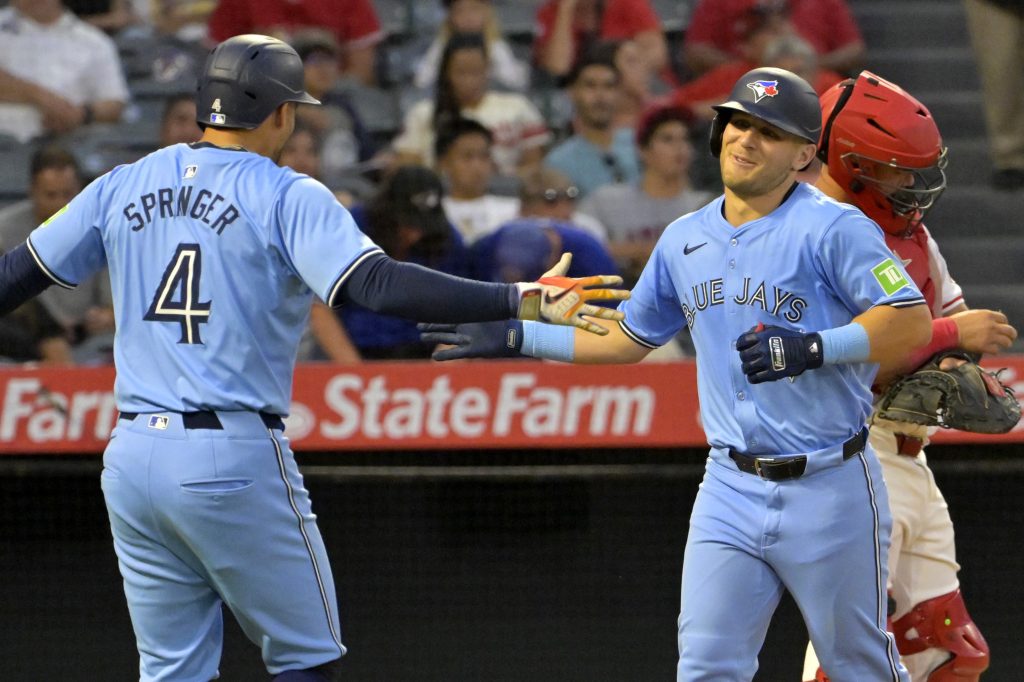
The Toronto Blue Jays must win a game by two-plus runs to cover as a run-line favourite. Photo by Jayne-Kamin-Oncea/AP.
Same-game parlay: Combining two or more wagers from a single event into one bet.
Sharp: Considered to be a smart and successful sports bettor.
Sportsbook: The operator that you place bets with, deposit funds with, and collect winnings from. NorthStar Bets is an example of an online sportsbook.
Square: A casual bettor who wagers on the public or popular side of a bet.
Straight up/SU: Refers to the winner of a match. A straight-up bet is placed on an outright winner and doesn’t involve a point spread.
Sweat: A bet that comes down to the last second or final play.
Taking the points: Betting on the underdog. If you back the Bills to cover a +3.5 spread, you are taking the points with Buffalo.
Teaser: Buying points from a sportsbook for a parlay. Sportsbooks typically award six points for a football teaser and four for basketball, but there must be at least two legs to the bet. If the Raptors are +4 underdogs, you can add them to a teaser at +8 (with greater juice).
Total: See over/under.
Under: A bet that requires a player, team, or game to score/accumulate less than the listed total.
Underdog: The team or player expected to lose. The underdog will have a plus (+) sign before their moneyline odds and/or point spread.
Unit: Refers to the base amount of money you place on a wager. If your base wager is $100, that would be one unit.
Swinging the sticks in Canada might be seasonal, but golf betting ensures that you can get in on the action year-round.
If you’re wondering how to bet on golf, you’ve come to the right place. There are many ways to bet on golf — from outright winners to player matchups — which will be run through below.
-> New to Golf wagering? Sign up at NorthStar Betsto get the latest odds, insights and betting tools throughout the season.
-> New to Golf wagering? Sign up at NorthStar Betsto get the latest odds, insights and betting tools throughout the season.
Golf betting is not limited to a specific tour, as fans can place wagers on the PGA, LPGA and European Tour, among other events throughout the year.
How to bet on golf
When considering how to bet on golf, ask yourself a few questions: Who is in the field? What will the conditions be like? Who does the course favour?
All of these factor into how the odds for the tournament favourites are set.
-> Before you get started, create your NorthStar Bets account to explore live odds and Golf markets.
-> Before you get started, create your NorthStar Bets accountto explore live odds and Golf markets.
Outrights
The most popular way to bet on professional golf is outright betting. In this scenario, you are placing a bet on a player to win the tournament.
Since there are so many players in a golf tournament, the odds of your choice winning will almost always be indicated with a (+) sign, meaning the selection is plus money — even if they are the favourite.
The odds vary drastically depending on who you are betting on. A player like Scottie Scheffler is far more likely to contend in a tournament than someone such as Rickie Fowler.
There are many things to take into consideration when placing an outright bet. Does the course favour distance or accuracy? What will the weather be like? Is the player riding a streak of good form?
It’s worth noting that these odds can change throughout the week leading up to the first round of the event.
-> Want to see current Golf outright prices? Check the latest at NorthStar Bets
-> Want to see current Golf outright prices? Check the latest at NorthStar Bets
Let’s use the 2024 Open Championship as an example. Xander Schauffele, who came out victorious, was +1,600 to win the tournament outright (an implied probability of 5.9%). This means a $100 bet would net a profit of $1,600.
In the same tournament, Justin Rose, the runner-up, had much longer odds going into the event at around +10,000 (1.0% implied probability).
During Tiger Woods’ prime, there would be instances where he was favoured at minus (-) odds to win events — yes, he was that good. This meant sportsbooks placed the probability of him winning above 50%.
He was the outright favourite at +150 at the 2005 Masters, meaning there was a 40% implied probability of him winning (he did, of course).
Let’s take a look at how different odds would pay out:
Odds
Wager
Win
Implied Probability
+150
$100
$150
40%
+900
$100
$900
10%
+1600
$100
$1600
5.88%
-200
$100
$50
66.67%
It is extremely rare to find an outright bet at (-) odds before a tournament begins, as Woods is no longer in his prime.
Tiger Woods is tied with Sam Snead for a PGA record 82 wins on tour.
Top finishes
Betting top finishes is a great way to find value for players you think will do well in tournaments without having to worry about them winning the event. There are offerings for top 20, top 10 and top-five finishes, among others.
Let’s use Brooke Henderson as an example. Say she is competing in the U.S Women’s Open where she is +2,500 outright. If you think Henderson will be in contention for the trophy but aren’t entirely sold, we’d recommend placing a top finish bet, as the return on investment is still sizeable.
-> Ready to try top finishes betting?Join NorthStar Bets and explore live, moving lines
-> Ready to try top finishes betting? Join NorthStar Bets and explore live, moving lines
The odds for a bet like this would be something along the lines of:
If you bet all three of the above examples and Henderson finished seventh, you would win the top 20 and top 10 but would lose the top-five bet.
Brooke Henderson has 16 top-10 finishes in major events. Photo by Steve Nesius/AP
End of round leader
End-of-round leader (commonly abbreviated to EOR) is another popular bet. The name is quite literal: pick the player who finishes the round at the top of the leaderboard.
Let’s say you bet Viktor Hovland to be the EOR leader at +2,000. If the round concluded and he sat atop the leaderboard at 7-under par, you would win. A $100 bet would net $2,000.
It basically follows the same rules as outright winners, but with one wrinkle — there can be ties.
For example: If two players finish the round tied atop the leaderboard at -7, the stake of your bet would be reduced by half.
A $100 bet at +2,000 would now net a profit of $1,000 instead of $2,000.
Similarly, if three players are tied, the stake is reduced by two-thirds, and so on.
EOR odds fluctuate as the round progresses and can be bet on during play, a process known as live betting, which we will go more in-depth on later.
How to bet on golf matchups
There is an old saying in golf that the only person you can play against is yourself. While players are dialled into their own game, bettors can take advantage of head-to-head matchups offered by sportsbooks.
These markets provide predetermined matchups of players similar in skill, where you can wager on who will shoot a lower score on a given day. There is typically a favourite which can vary from -120 all the way to around -200.
There are two main head-to-head matchups available: 72-hole, and 18-hole.
72-hole matchups
Wagers on 72-hole matchups are placed before the tournament begins and run throughout the event, culminating after the final round ends. The golfer with the lowest score wins.
For example, Dustin Johnson and Jordan Spieth are both playing in the U.S. Open. Before placing a bet, you would have to consider factors such as each player’s history at the course, their current form and who the course setup favours more.
Let’s assume Johnson opens as a favourite, the odds would look something like this:
Dustin Johnson (-120) vs. Jordan Spieth (+120)
If the tournament culminates and Spieth finishes 6-under par while Johnson finishes 5-under par, the Spieth ticket cashes. A $100 bet would net a profit of $120.
18-hole matchups
The other option is an 18-hole matchup, which is placed before a specific round begins and the winner is determined by whoever shoots the lower score that day.
Let’s use the Spieth (+120) vs. Johnson (-120) example again with the same odds, but for an 18-hole matchup.
Going into the second round of an event, Spieth is even par for the tournament and Johnson is 1-over par. If Johnson shoots a 3-under round, and Spieth shoots 2-under, they would be tied on the leaderboard.
But since Johnson had the lower score over the 18 holes wagered on, he would be the winner of that bet.
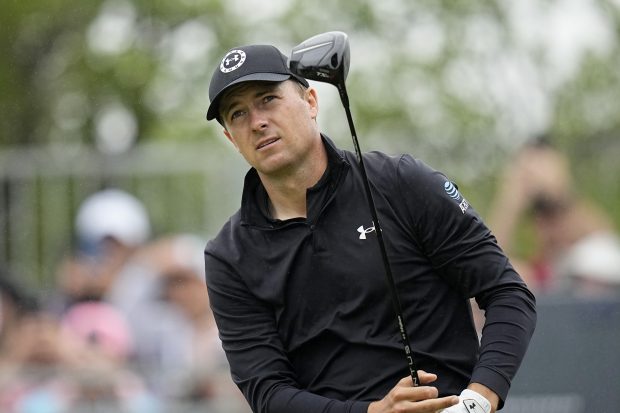
Jordan Spieth and Dustin Johnson during a round at the 2018 Pebble Beach ProAm. Photo by Eric Risberg/AP.
How to bet on golf props
Prop betting is a way to bet on specific events that will occur throughout a tournament.
A variety of props are offered to the bettor depending on the tournament. These can include whether there will be a hole-in-one, the nationality of the winner, or if there will be a playoff, among other options.
-> Check out the latest props every day at NorthStar Bets – from betting playoffs, hole-in-ones and much more
-> Check out the latest props every day at NorthStar Bets – from betting playoffs, hole-in-ones and much more
Tournament props are tied to the field, not a player. If you are to bet on a hole-in-one during a tournament (+150), it does not matter who gets the ace, it only matters that it occurs.
There are also certain player props available. One popular pick is wagering on whether a golfer will make or miss the cut.
Players like Jon Rahm and Patrick Cantlay have far better odds to make the cut (-500) than they do to miss (+300). Therefore, it wouldn’t be wise to place a bet on Cantlay to make the cut, as the return on investment is low.
How to bet on golf futures
Futures markets are a unique way for bettors to place a wager on an event that will occur at a later date. You can bet on winners of majors, team events, and the FedEx Cup, while also placing future player props.
Let’s say you have a hunch that Europe will retain the Ryder Cup. Although the event will occur in 2025, odds are currently available. Placing a futures bet now ensures you are locked into those odds regardless of roster changes, player performance, or injury.
Futures betting is also available for the outright winners of major tournaments. If you believe a player is going to be on a hot streak come July, you can generally get better odds placing a futures bet in February than you would by placing an outright bet the week of the event.
For example, Ludvig Aberg is around +1,400 to win next year’s U.S. Open as of October. If he was in great form heading into the tournament, his odds could shorten to around +1,000, leaving you with a more valuable ticket.
If Aberg was missing cuts leading into the tournament, you may find his odds lengthened to +2,500. This would lower the value of your original bet.
Live betting in golf is volatile but provides extreme value if you can sniff out the right player.
For both outright betting and end-of-round betting, player odds will drastically fluctuate on a hole-to-hole basis. This depends on how they are performing relative to the competition.
-> Experience live Golf betting as it happens – sign up with NorthStar Bets and get in on every swing
-> Experience live Golf betting as it happens – sign up with NorthStar Bets and get in on every swing
If one were to bet Thomas outright at +2,500 and he started the tournament with a triple-bogey on the first hole, his live odds would surely rise to around +4,000 — maybe even higher.
For an end-of-round leader bet, you could pick a player who is sitting at +3,000 live to lead the round right before a hot streak where they go 5-under par over four holes. That same player’s live EOR odds could shift to -150 after that.
These markets stay open throughout the event but are often put on hold right after a big shot is made. Once the sportsbook sets its new live odds, betting is reopened.
There is also an option to live bet player props on certain holes. You would have a list of possible outcomes if Corey Conners were about to play a par five. It could look like this:
Par to hole (-130) Birdie or better (+150) Bogey or worse (+250)
If Conners birdied the hole, the +150 bet would cash and the other two props would lose.
-> Ready to put your Golf knowledge to use ? Sign up for NorthStar Bets to access live odds, props, parlays and exclusive Canadian Insights all season long
-> Ready to put your Golf knowledge to use ? Sign up for NorthStar Bets to access live odds, props, parlays and exclusive Canadian Insights all season long
Tennis is one of the most popular sports in the world, and it reaches its pinnacle on two tours: the ATP for men and the WTA for women.
Over the past 20 years, tennis has largely been dominated by four big names: Novak Djokovic, Serena Williams, Roger Federer and Rafael Nadal. But with that era waning, a new era of stars is emerging, led by young Spaniard Carlos Alcaraz.
-> New to tennis wagering? Sign up at NorthStar Betsto get the latest odds, insights and betting tools throughout the season.
-> New to tennis wagering? Sign up at NorthStar Betsto get the latest odds, insights and betting tools throughout the season.
Now is a great time to embrace tennis and learn about betting on it, too.
How to bet on tennis
The legalization of single-game betting in Canada presents the perfect opportunity to grow familiar with the different ways you can bet on your favourite sports.
From match spreads to player props, we will run you through the most popular ways to bet on tennis.
-> Before you get started, create your NorthStar Bets account to explore live odds and daily tennis markets.
-> Before you get started, create your NorthStar Bets accountto explore live odds and daily tennis markets
Match winners
Picking the winner of a match is the most popular way to bet on tennis, due in part to its simplicity.
One player will be denoted as the favourite, with a (-) sign next to their name, while the other will be the underdog, with a (+) sign next to their name. Think of this as a moneyline (ML) wager.
Let’s use a hypothetical match between Alcaraz and Djokovic at the Wimbledon as an example. Djokovic is known for being the best grass player in the world, which would likely lead him to be favoured, and the odds could look something like this:
Novak Djokovic (-150) vs. Carlos Alcaraz (+120).
-> Want to see current tennis moneyline prices? Check the latest at NorthStar Bets
-> Want to see current tennis moneyline prices? Check the latest at NorthStar Bets
In this scenario, Djokovic at -150 has a 60% implied probability to win. This means you would have to bet $150 to win $100. The extra $50 is the commission the sportsbook takes and is known as the juice.
Sometimes there will be matches where the favourite sits at -1,000 or more to win. At -1000 the book is placing a 90% implied probability of victory.
Roger Federer was typically a massive favourite during his prime. Photo by Kirsty Wigglesworth/AP.
Ashleigh Barty was the WTA world No. 1 prior to her shocking retirement at the age of 25. You could often find her as a massive favourite in the early rounds of tournaments.
If superstar WTA player Iga Swiatek were to play Julia Grabher, the No. 90-ranked player, you should expect to see odds at -1,250 or more for Swiatek to win.
Some other examples of odds and their accompanying payouts:
-125: Bet $125 to win $100 -400: Bet $400 to win $100 +175: A $100 bet wins $175 +300: A $100 bet wins $300
Match handicaps
Match handicap is essentially betting the spread for tennis.
Sportsbooks set a number of games they believe the favourite will win by and you have to decide whether or not the favourite will cover that amount to win. This allows bettors to get even odds for an uneven match.
Take the example of Swiatek and Grabher from above. It’s not worth betting Swiatek on the moneyline, as you’d need to risk $1,250 to win $100. Also, it is very unlikely that Grabher wins, so her ML action is also not the play. The match handicap provides a way to bet Swiatek or Grabher with a good return on investment.
Match handicaps are typically provided with odds set at -110 apiece. You may see some variance — possibly -130 odds on one side and +110 on the other — but the odds are usually close to even.
Using the same Swiatek vs. Grabher example, the match handicap could be set at 6.5, meaning Swiatek would have to win by 7 games or more. If Swiatek won the match 6-2, 6-3, that would mean she bested Grabher in total games, 12-5. With a difference of seven, Swiatek would have covered the match handicap.
If Swiatek won 6-4, 3-6, 6-2 that would mean a 15-12 win overall, and Grabher would win the match handicap bet.
The match handicap can change drastically based on who is competing, what surface is being played on and who is riding a hot streak.
-> Ready to try handicap betting?Join NorthStar Bets and explore live, moving lines daily
-> Ready to try handicap betting? Join NorthStar Bets and explore live, moving lines daily
Set betting
Set betting allows you to wager more specifically on how you think a match will play out. There are options to bet either competitor to win 3-0, 3-1, or 3-2 for ATP matches, as well as 2-0 or 2-1 for WTA matches.
Let’s use a fairly even ATP match to demonstrate how this would work. On the moneyline, we’ll say Stefanos Tsitsipas is a -130 favourite, while Taylor Fritz is a +120 underdog. Here are their set betting odds:
3-0: Tsitsipas (+300), Fritz (+500) 3-1: Tsitsipas (+333), Fritz (+450) 3-2: Tsitsipas (+500), Fritz (+430)
The book assumes Tsitsipas has the best chance to win in straight sets, while Fritz’s best chance is to force a long and gruelling match, winning 3-2 (at +430).
If a player is -600 to win outright, and you are confident they will demolish their opponent, it could be a good idea to bet them to win in straight sets, where you may find better value.
Totals
There are multiple ways to bet totals in tennis, varying from individual sets to match totals. This is also referred to as an over/under, or O/U. Typically, both the over and under will be designated with -110 odds.
The most common O/U to bet on is total games, in which you are wagering on how long the match will last. Suppose the O/U for total games in a WTA match is set at 20.5.
There are a number of ways you can bet on Bianca Andreescu in any of her tennis matches. Photo by Seth Wenig/AP.
If the match were to end 6-0, 4-6, 6-2, then the total amount of games is 24, and the over would win. If the match ended 6-2, 6-0, the total games would sit at 14 and cash the under.
The same rule applies for set game totals, but the number would look smaller, perhaps around 7.5.
You can also bet on total sets, which may look like this for an ATP matchup:
Every tournament is comprised of dozens of head-to-head matches, but the ultimate goal for each player is to win the event.
Picking an outright winner allows bettors to decide who will win the event, whether the bet is placed before or during the tournament.
Let’s assume you’re picking an outright winner before the tournament starts. The highest seeds will likely have the best odds. For the ATP, that might include players like Djokovic and Daniil Medvedev. In the WTA, you could see players like Swiatek and Aryna Sabalenka.
As you go further down the seeding, longer odds will appear for players who are deemed less likely to win the tournament. For instance, Felix Auger-Aliassime could be set at +5,000 to win a high-level event before it begins.
These odds shift based on who is remaining in the tournament. If Auger-Aliassime progresses to the round of 32, his odds could shift to around +1,500.
When Bianca Andreescu won the U.S Open in 2019, her pre-tournament outright odds were set at +1400, according to SB Nation. This means a $100 bet would have netted a $1,400 profit.
How to bet on tennis props
Tennis has a robust prop market. Within every match, there are hundreds of options for prop bets, which are typically split into match and player props.
Player props are denoted for one specific competitor and are often presented in an over/under or yes/no format. Let’s use Denis Shapovalov as an example:
Shapovalov O/U 6.5 aces (-110) Shapovalov O/U 19.5 game wins (-110) To win from behind: Yes (+400) No (-500)
You can bet on Denis Shapovalov props if you’re uninterested in wagering on outright markets. Photo by Marcio Jose Sanchez/AP.
Match props combine possible outcomes from both competitors. Here are some examples:
First set total games O/U 9.5 (Over -175, Under +130) Total breaks of serve O/U 4.5 (Over -163, Under +120) Match total double faults O/U 4.5 (Over -120, Under -120)
There are many more props to choose from, so take a close look when deciding what you want to place.
-> Check out the latest player props every day at NorthStar Bets – from betting aces, faults and much more
-> Check out the latest player props every day at NorthStar Bets – from betting aces, faults and much more
Live betting
Live betting is a way to bet on a match once it is underway. This may provide an opportunity to back a pre-match favourite who has shifted to underdog odds.
Let’s say Leylah Fernandez was -200 to win the match prior to its start. If she were to lose the first set, the odds to win could shift to something like +200 on the live market. With that change, the ROI on a $100 bet would go from $50 to $200 after just one set.
Live betting set winners is also common practice. Odds fluctuate drastically on a point-to-point basis when live betting sets. For instance, if one player breaks another’s serve, you will see their live odds shorten.
You can also live bet individual points, games or over/unders.
-> Experience live tennis betting as it happens – sign up with NorthStar Bets and get in on every serve
-> Experience live tennis betting as it happens – sign up with NorthStar Bets and get in on every serve
How to bet on tennis parlays
To build a parlay, combine two or more selections (also called legs) into one bet slip. You can combine multiple markets into a parlay, mixing match winners, spreads, props and more.
When parlaying, you assume greater risk compared to when you place individual wagers — that’s because every leg must win for your parlay to be successful. So if you have a five-leg parlay and only four legs cash, you lose.
Denis Shapovolov to win match (+150) Andrey Rublev -3.5 match handicap (-110) Stefanos Tsitsipas to win 3-0 (+270)
The combined odds for this particular parlay would be +1665, which potentially turns a $100 wager into a $1,665 profit.
-> Ready to put your tennis knowledge to use ? Sign up for NorthStar Bets to access live odds, props, parlays and exclusive Canadian Insights all season long
-> Ready to put your tennis knowledge to use ? Sign up for NorthStar Bets to access live odds, props, parlays and exclusive Canadian Insights all season long